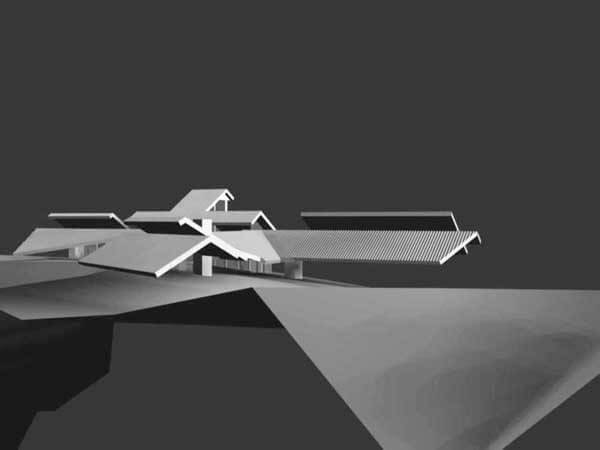
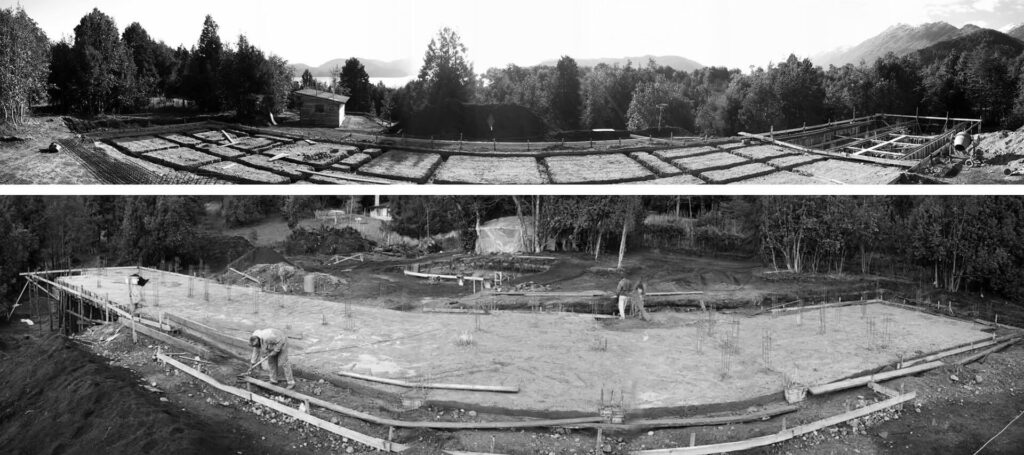
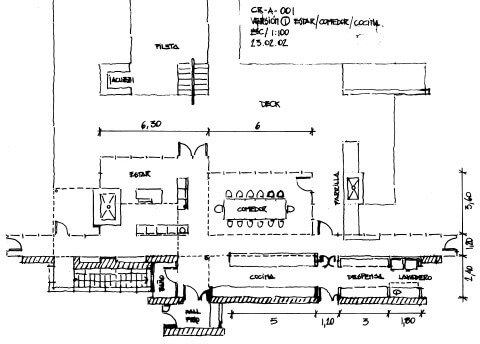
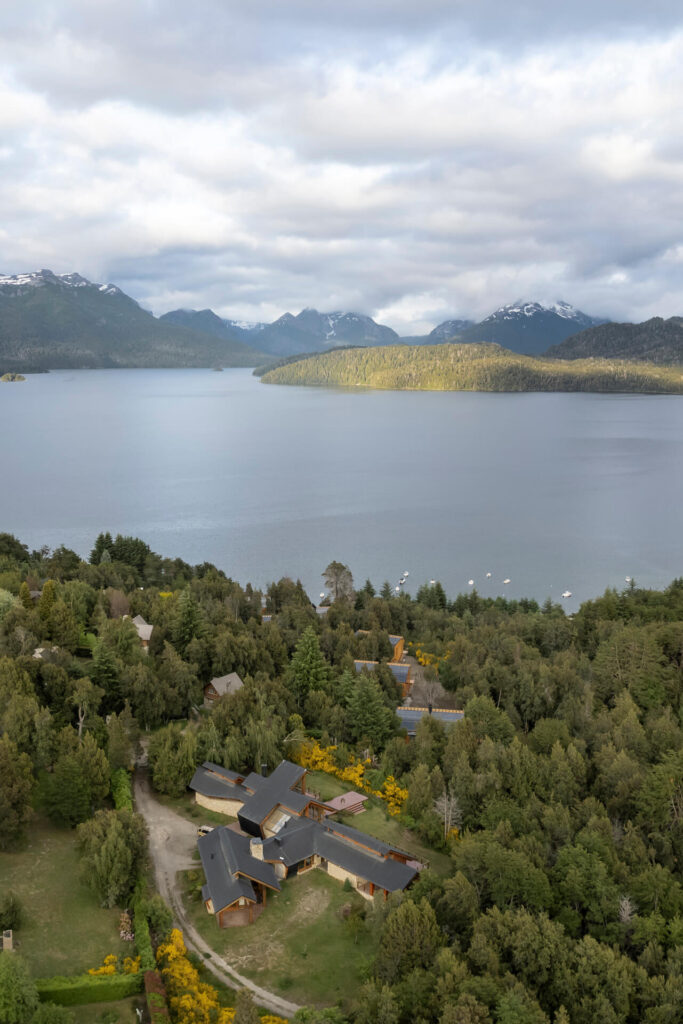
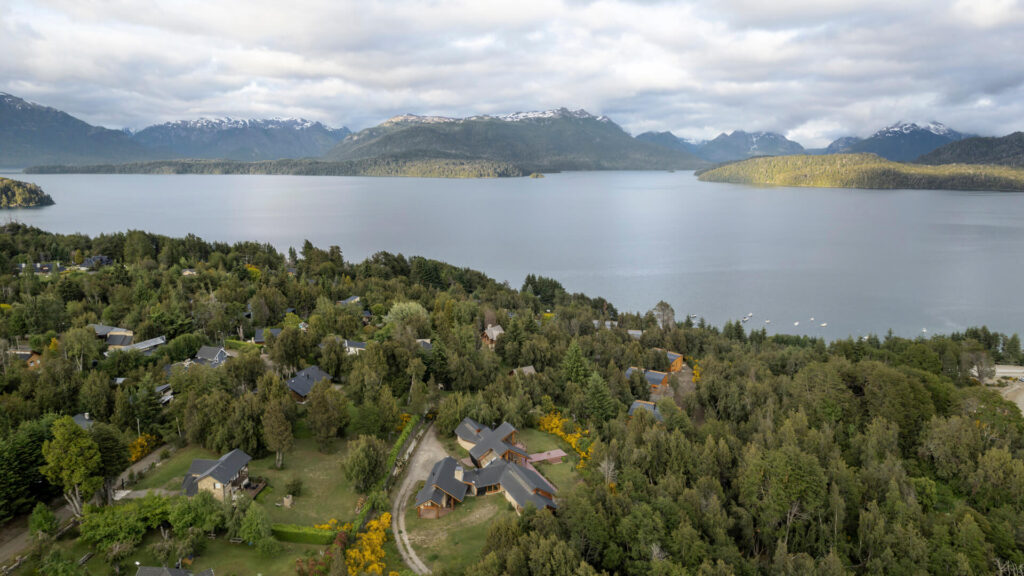
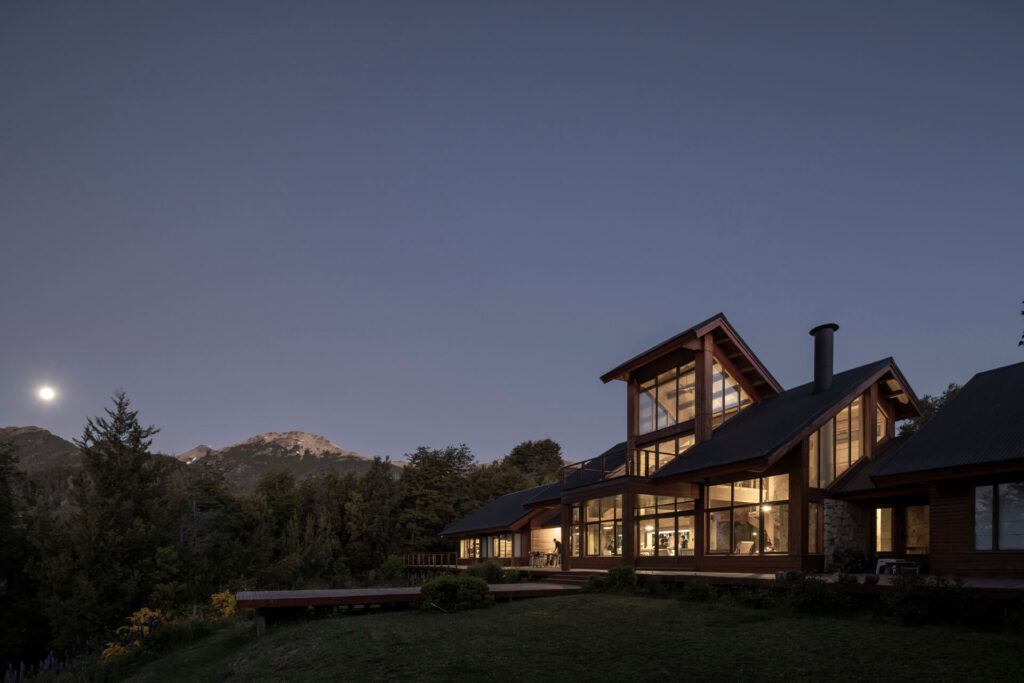
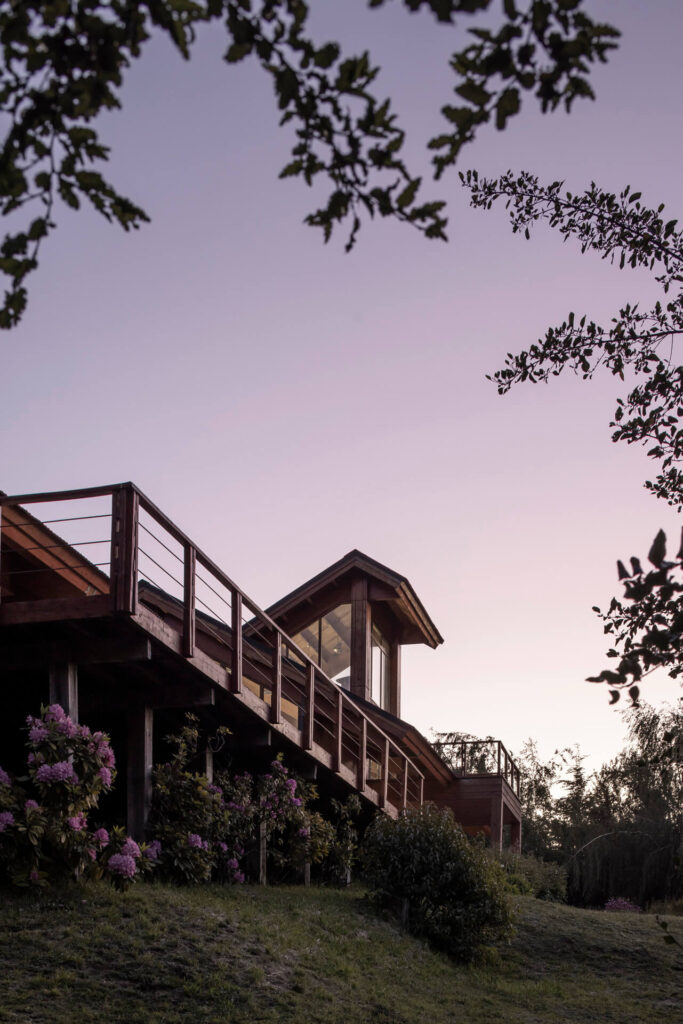
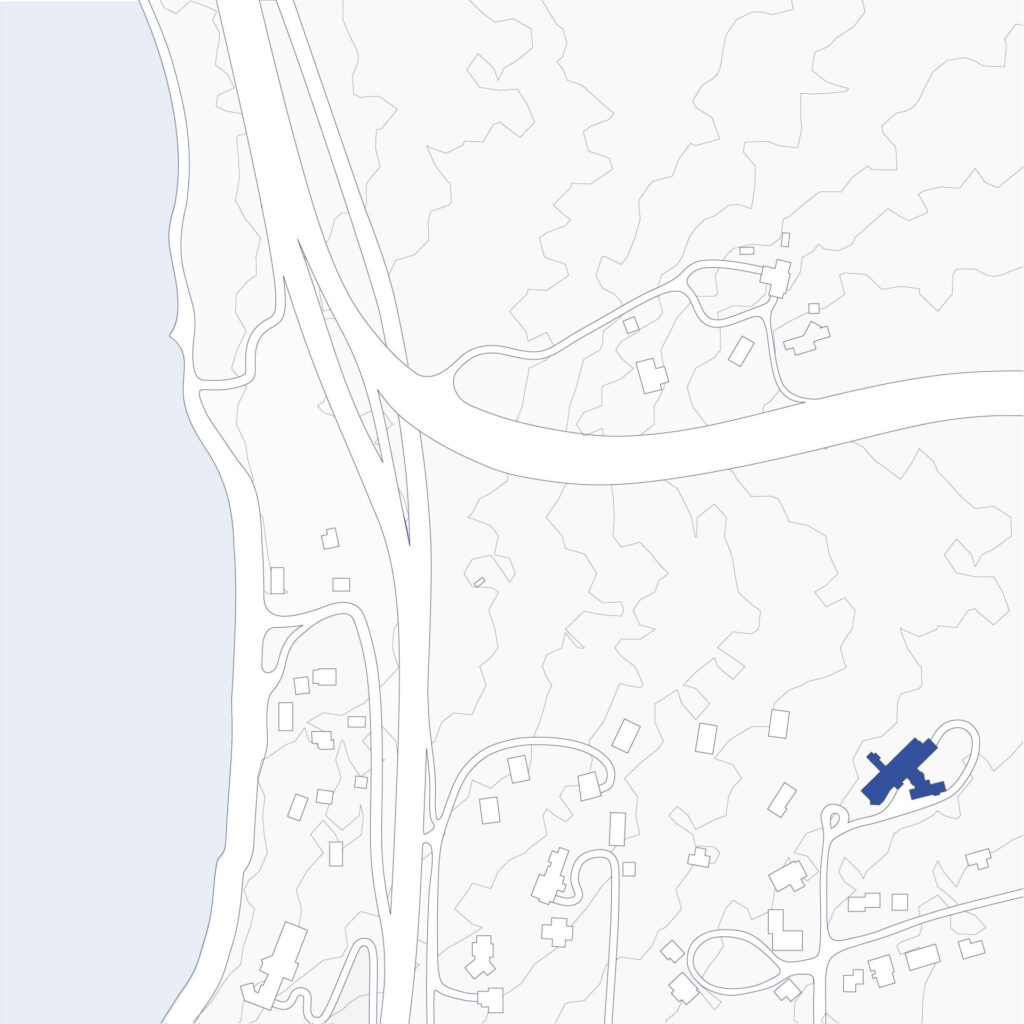
Esta vivienda unifamiliar, implantada sobre una ladera en las afueras de Villa La Angostura, Neuquén, busca establecer una relación directa con el paisaje patagónico de montañas y lagos. El terreno, de dos hectáreas y con un desnivel de casi veinte metros, se encuentra en las afueras del casco urbano, en una zona de baja densidad donde predomina el paisaje natural. Desde su punto más alto, el sitio ofrece vistas excepcionales hacia los lagos Nahuel Huapi y Correntoso, enmarcados por cadenas montañosas que definen el horizonte. Estas condiciones topográficas y visuales guiaron la decisión de implantar la vivienda en la parte más elevada del lote. El pedido del cliente consistía en una casa en un solo nivel, que combinara amplios espacios sociales y sectores de verdadera privacidad. Era además una particularidad de la normativa local la exigencia de cubiertas inclinadas con una pendiente mínima de treinta grados.
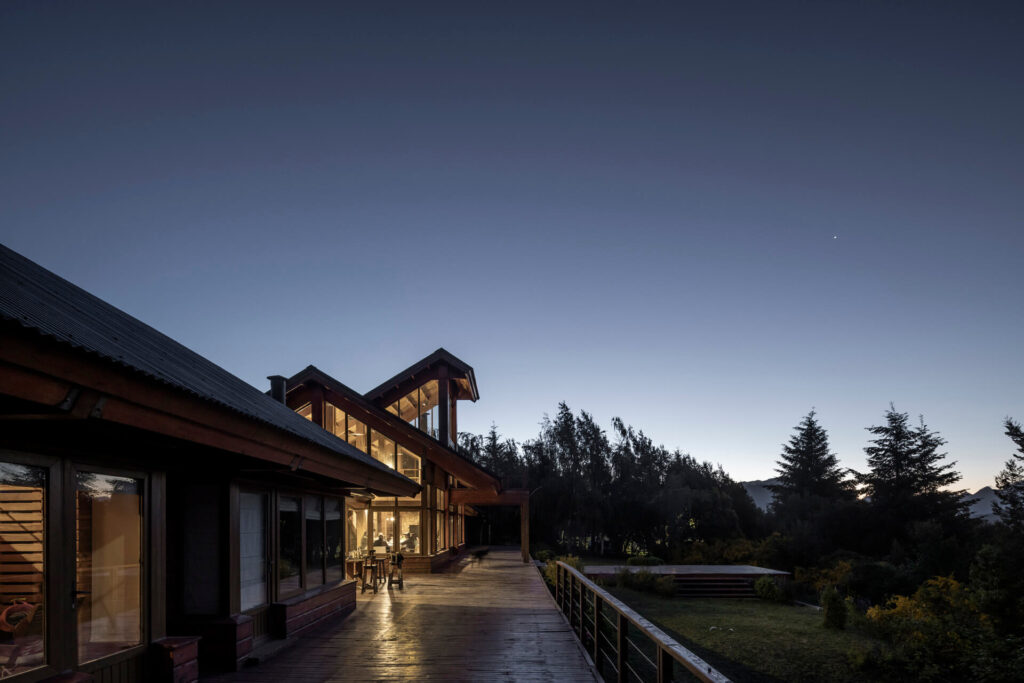
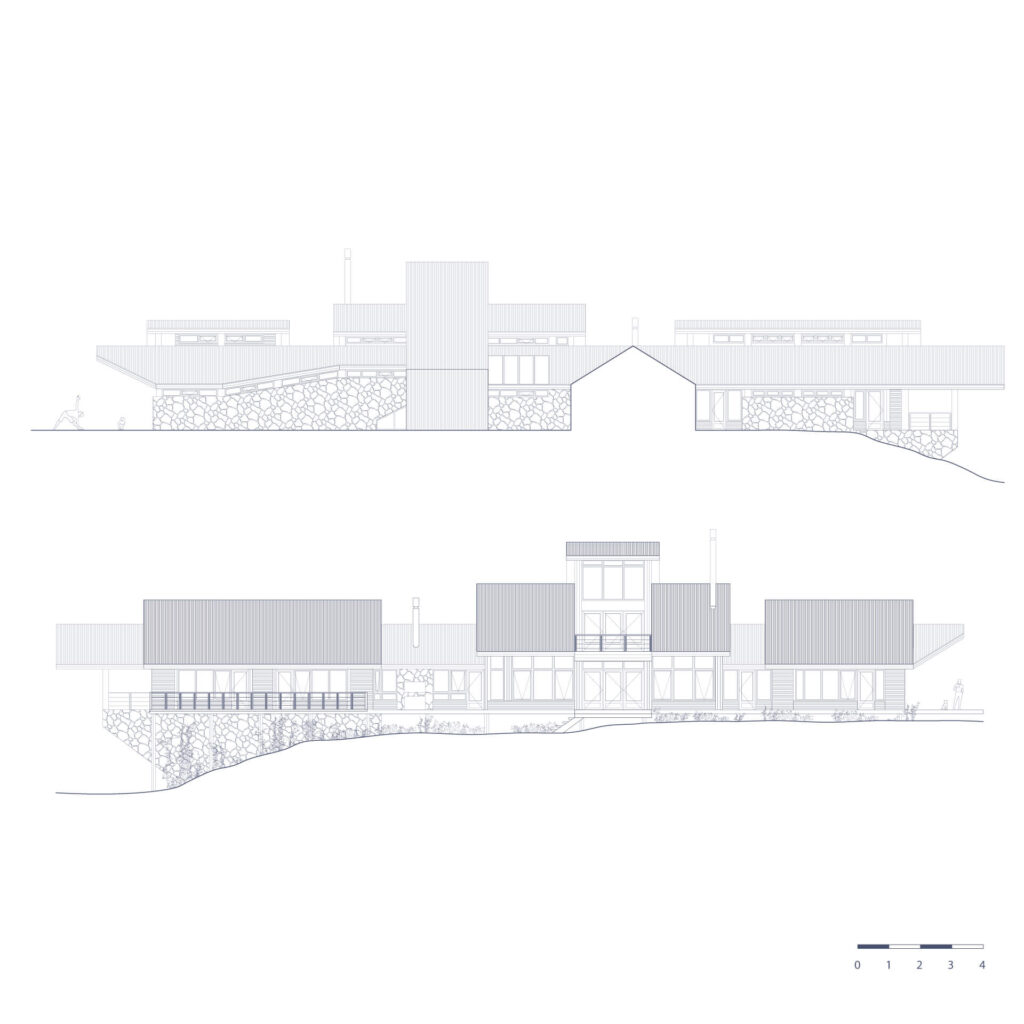
The main house unfolds along a linear plan running perpendicular to the northern views. A central circulation spine orders the layout, with principal rooms facing north and service areas to the south. Along this route, a series of recesses and courtyards introduce
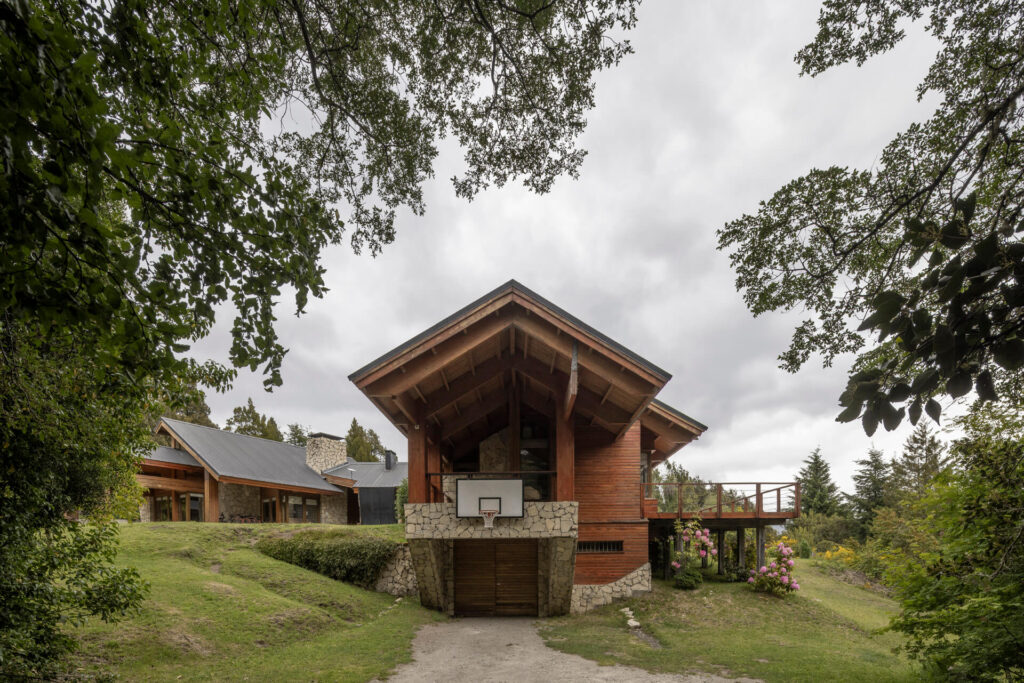
moments of privacy and lateral views across the landscape. A separate guest house sits slightly rotated to the south, together with the main volume creating an outdoor space used as a carport.
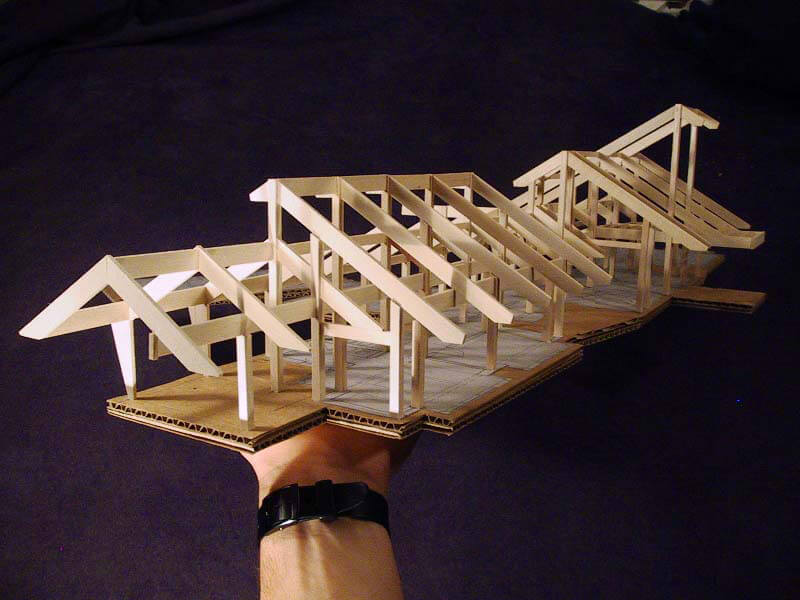
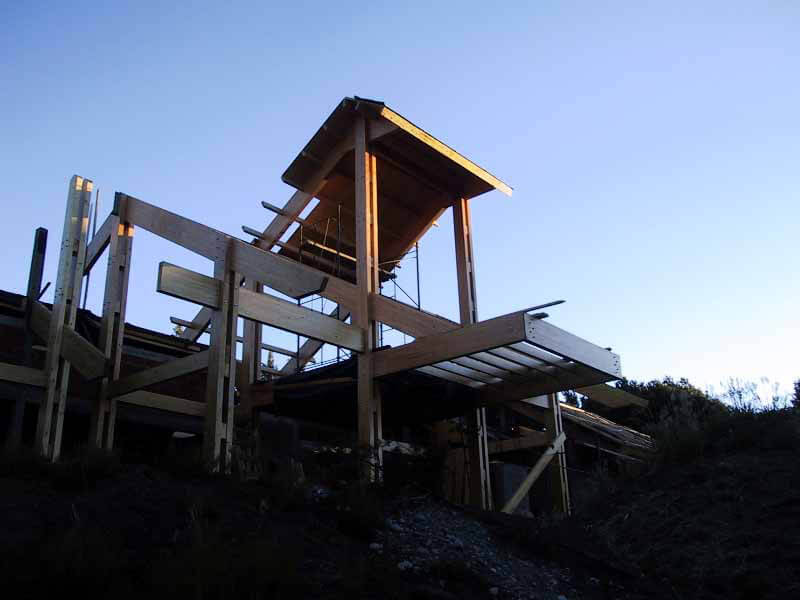
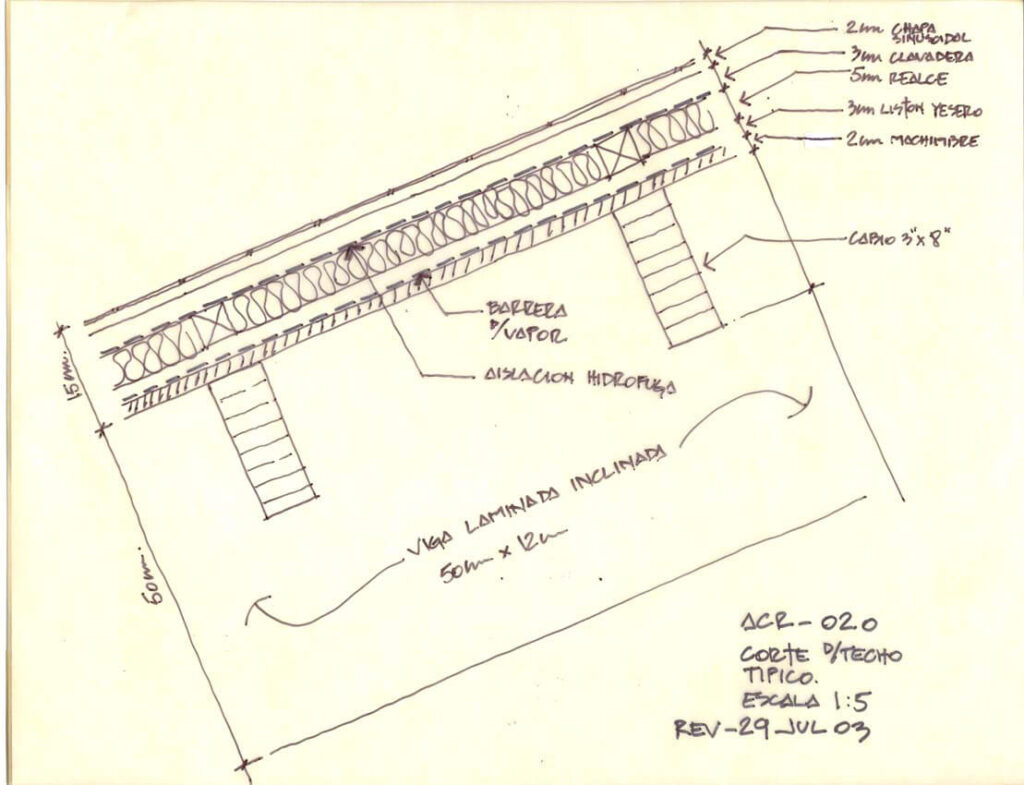
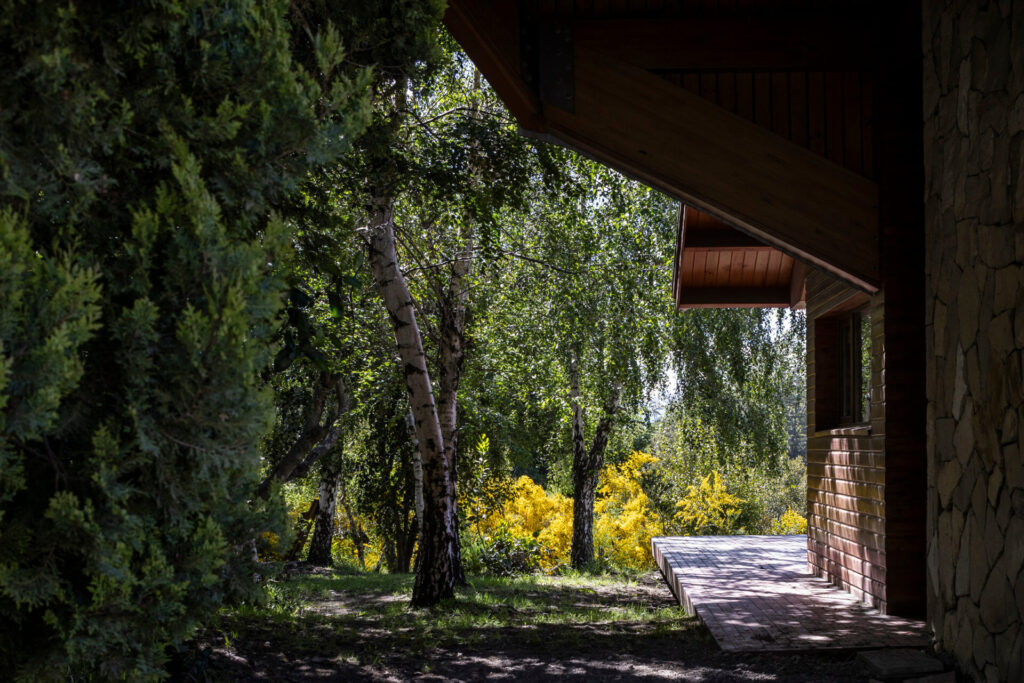
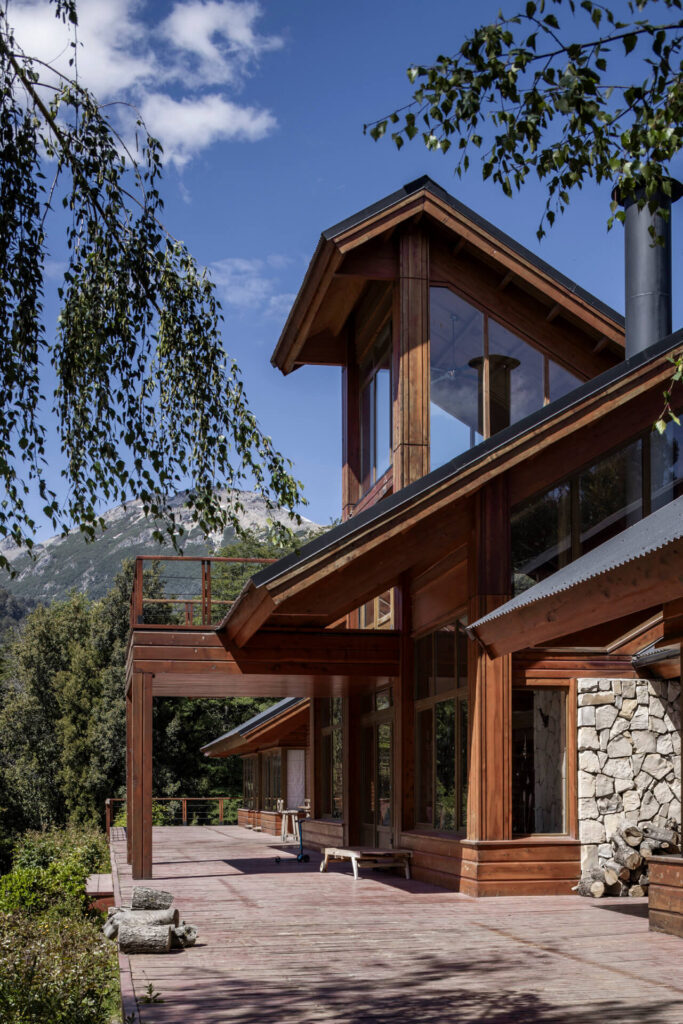
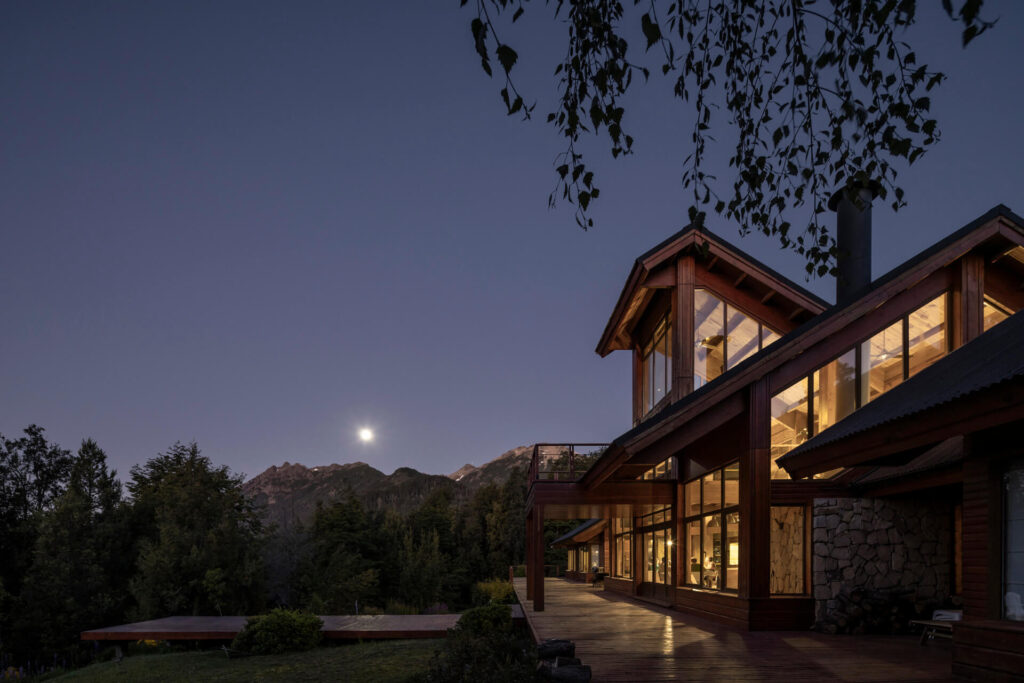
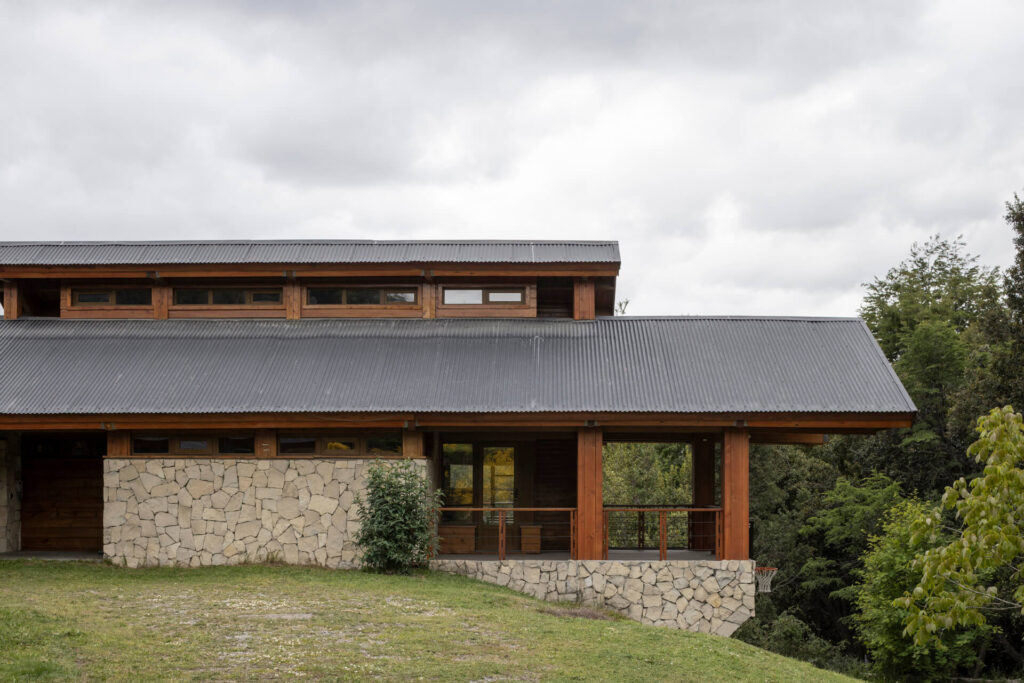
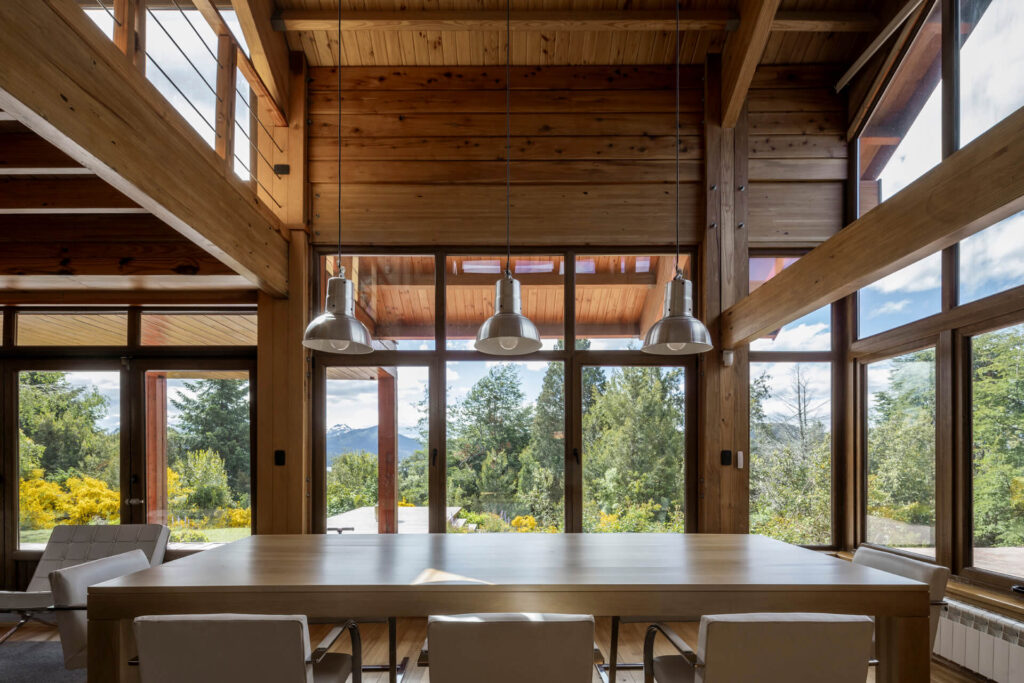
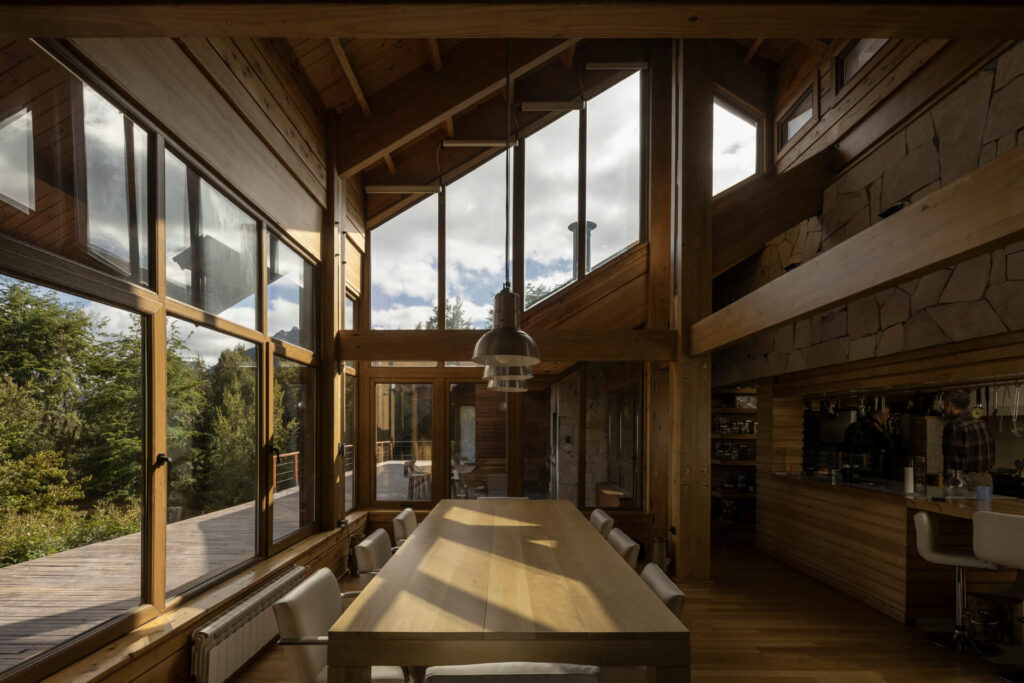
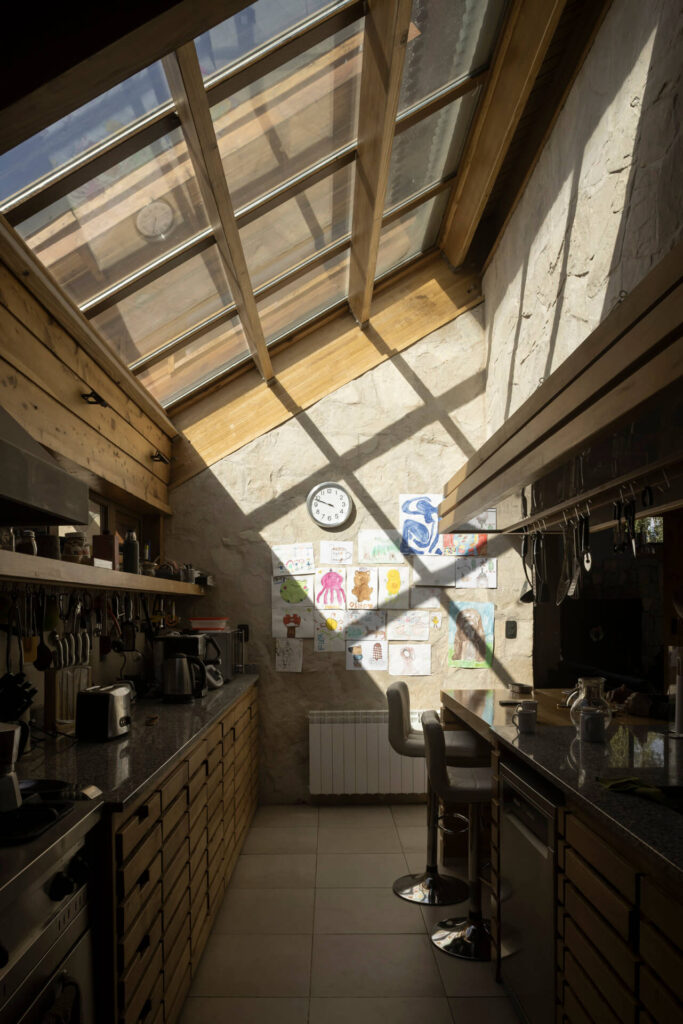
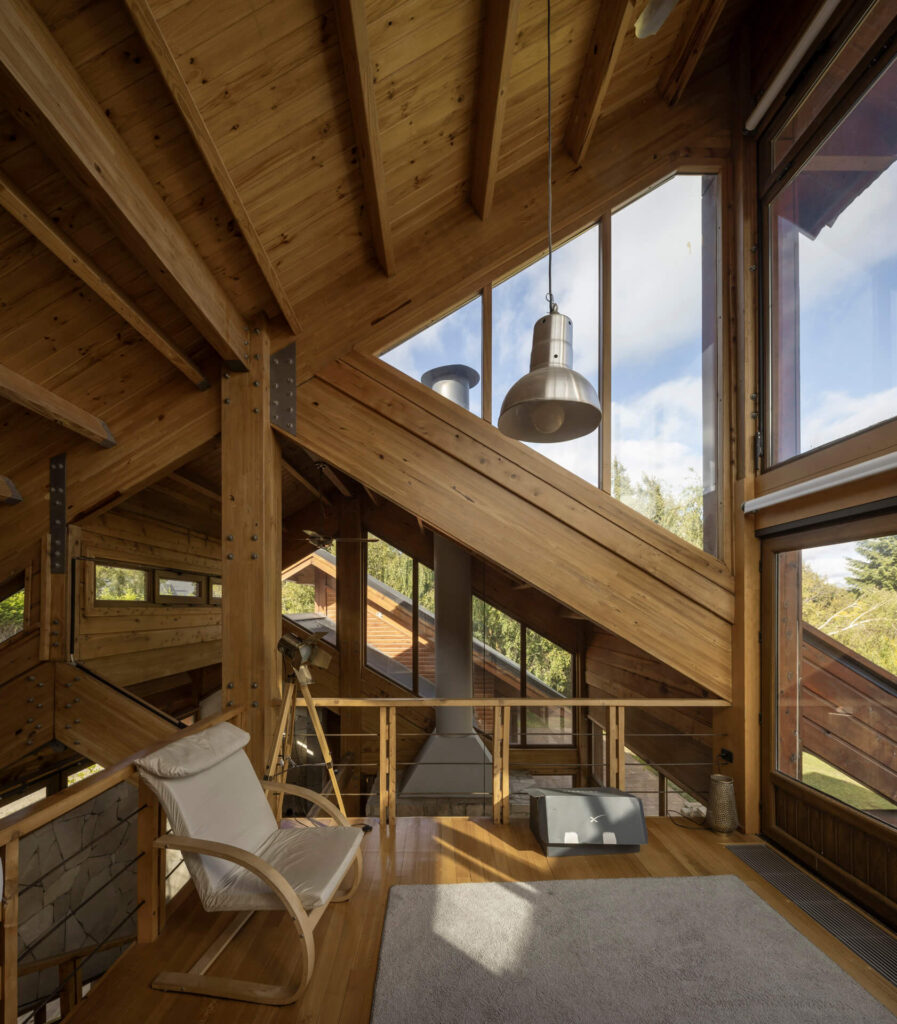
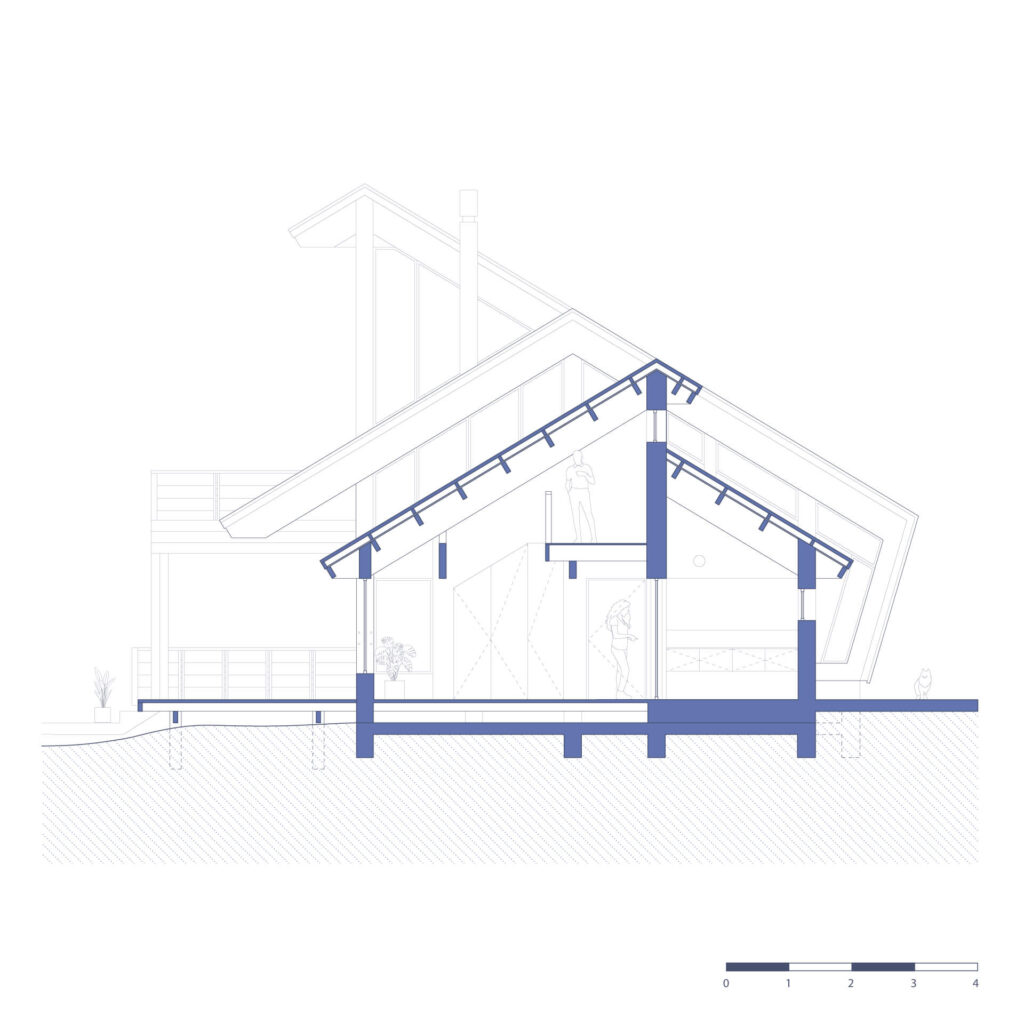
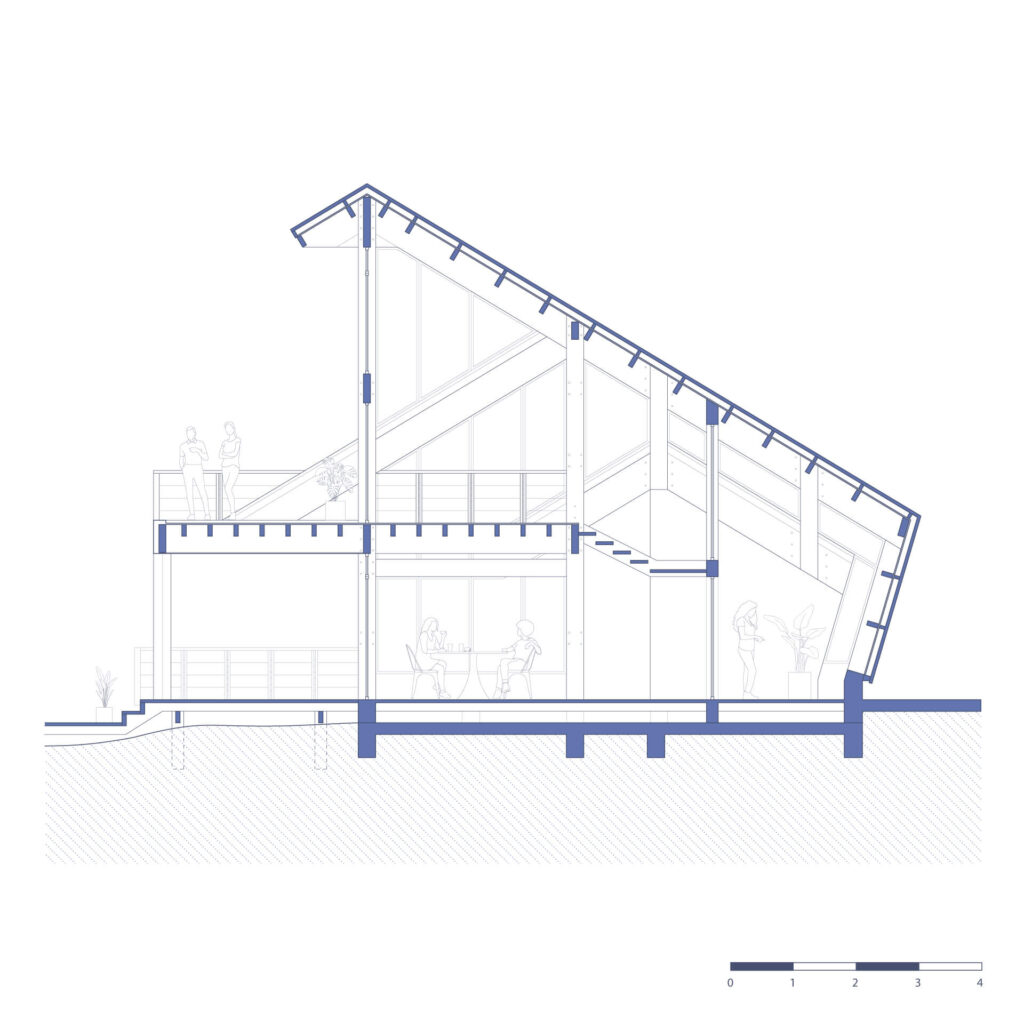
Material choices reinforce the building’s organisation and orientation. The service areas to the south employ stone-clad walls and carefully controlled openings that bring in soft, diffuse light. The north-facing living spaces, by contrast, are defined by a series of laminated timber frames and large glazed openings that open the interior to the landscape. The laminated-timber roof acts as a unifying element: a succession of pitched planes that shift in height as they move along the plan, rising above the living area to accommodate a small mezzanine. Externally, this sequence produces a silhouette that echoes the surrounding mountains, strengthening the building’s relationship with its setting.









Laminated Timber Structure — Design and Assembly
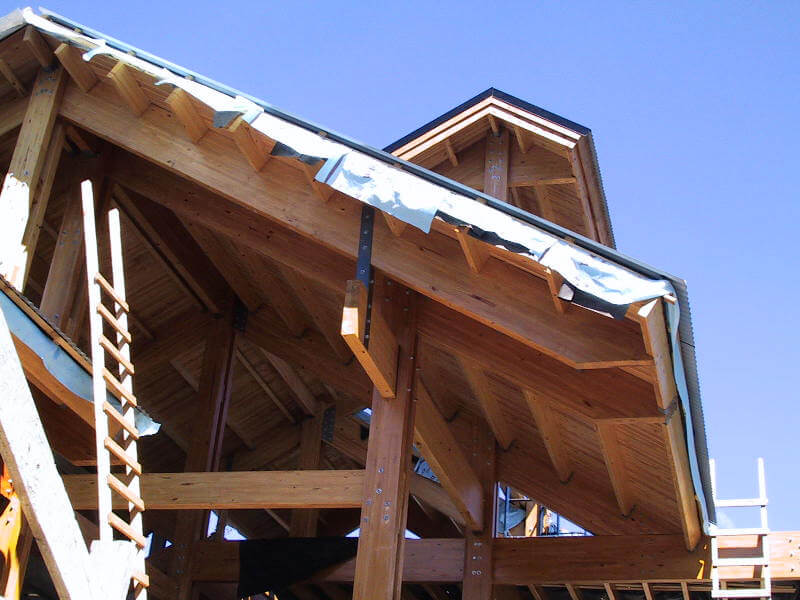
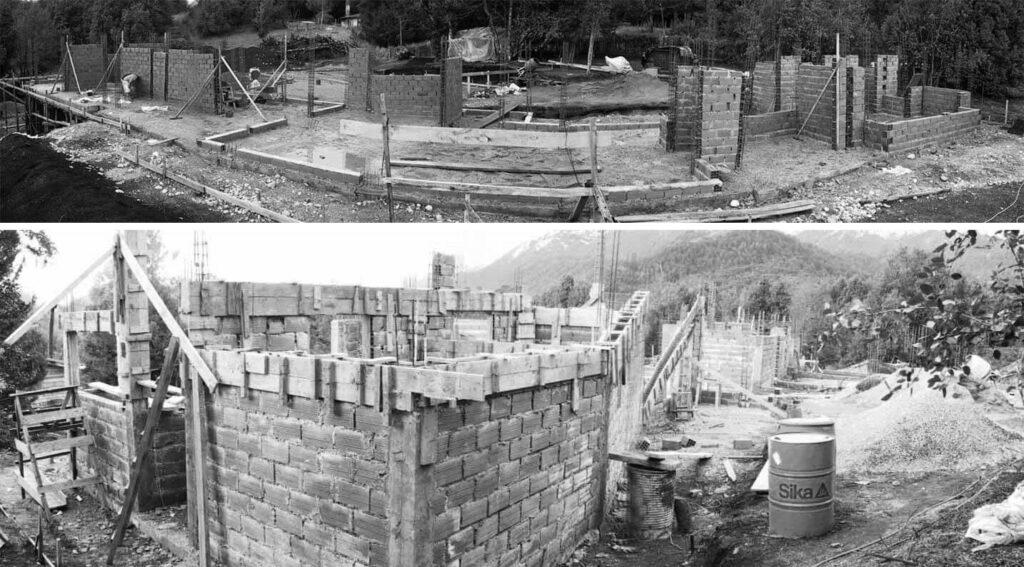
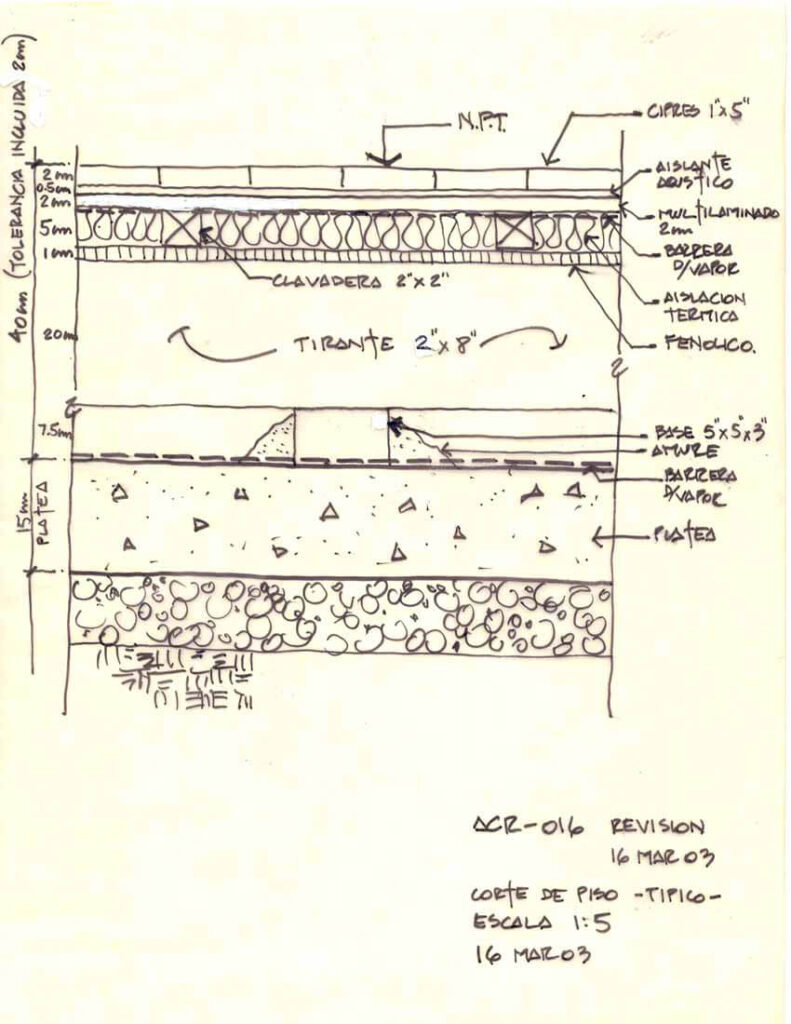
The laminated timber structure was central to the design approach. Conceived to remain fully exposed, it shapes the character of the interior through its inclined planes, shifting heights and interlocking geometries. The timber needed to work in tandem with the reinforced concrete structure that forms the service wing, and the junction between the two systems demanded particular care to maintain coherence in both form and construction. From early on, the design anticipated the different tolerances inherent to timber and concrete.
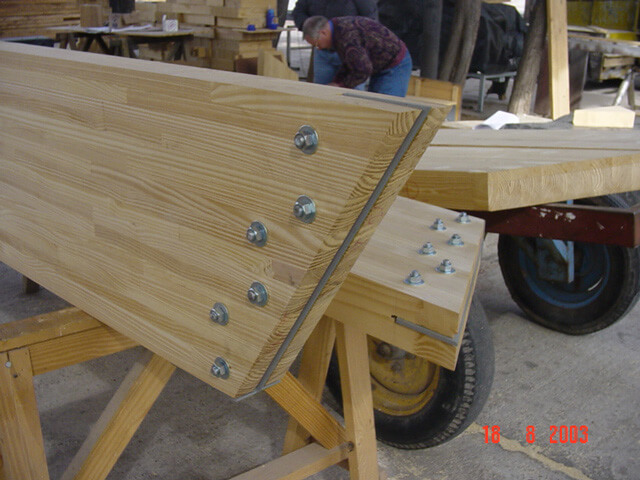
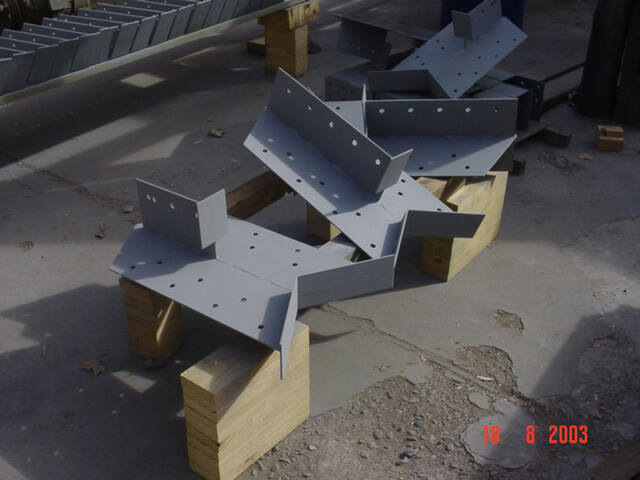
Adjustment mechanisms were incorporated to reconcile the precision of laminated timber with the broader variations typical of concrete work. Embedded steel plates, pre-assembled connections and components designed with a degree of flexibility allowed the structure to be fine-tuned during installation. These measures ensured a seamless relationship between the two systems and allowed the complexity of the design to be realised accurately on site.